Movie Marketing Masterclass: How to Build a Visual Campaign Around Your Movie Poster
How to Build a Visual Campaign Around Your Movie, Starting with the Poster. Your movie is finished. This is how you get people to watch it, by Building An Independent Movie Campaign
9/29/20267 min read


Independent filmmakers: your movie poster shouldn't be the beginning of your marketing campaign. It should be the culmination of one.
Independent filmmakers spend years writing, financing, shooting, editing and finishing a film. But when the movie is finally complete, there is often one thing that gets pushed to the last minute: marketing the film.
The reality is that making an independent film is only part of the journey.
You also have to find an audience.
Whether your goal is to attract investors, raise money through Kickstarter or GoFundMe, get into film festivals, attract distributors, secure streaming opportunities, rent or sell the film, or simply build an audience around your project, visual storytelling is part of that process from the very beginning.
Your movie poster is important. But it shouldn't be the only piece of visual marketing you create. Think of your film's artwork as a visual campaign that develops alongside the movie.


1. Start With Visual Marketing When You Start Raising Money
For many independent filmmakers, the first public-facing version of a film isn't the finished movie.
It's the crowdfunding campaign.
A Kickstarter or GoFundMe page needs to communicate the idea of your film quickly. A strong image can help potential backers understand the tone, genre and ambition of the project before they ever read the full pitch.
This is where professional film key art, concept art, photography and graphic design can begin establishing the visual identity of an independent film.
The artwork created at this stage can also become the foundation for:
Kickstarter and GoFundMe campaigns
social media announcements
investor presentations
email campaigns
filmmaker websites
pitch materials
production announcements
You're not just raising money for a movie. You're beginning to build an audience around the movie.


2. Your Pitch Deck Is Another Piece of Film Marketing
Once you're talking to investors, producers, potential partners or distributors, your film pitch deck becomes one of the most important visual presentations surrounding the project.
A pitch deck needs to communicate much more than the plot.
It needs to communicate the world of the film.
Photography, color, typography, references, character imagery and visual direction can help investors understand what the finished movie is intended to look and feel like.
And the need for professional visual presentation doesn't necessarily end once the film is financed.
Different audiences may require different presentations. An investor may want to understand the business opportunity behind the film, while a distributor or streaming platform may be looking at the finished project from a different perspective.
The visual language established during development can help carry the project through those stages.
Link: Read my guide to professional film pitch deck design for independent filmmakers.

3. Photography on Set Should Be a Priority,
Not an Afterthought
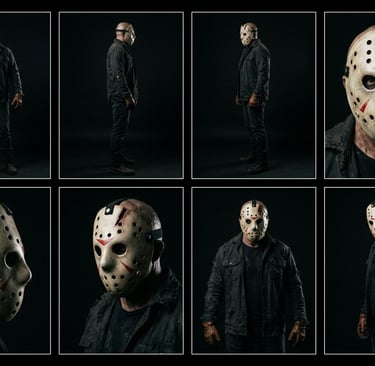
Here's one of the biggest mistakes I see independent filmmakers make: They finish shooting the movie and then realize they don't have enough good photography to market it.
By then, it's too late go back... but not all is lost. That's when Big Picture jumps in.
The actors have gone home. The sets have been struck. The costumes are gone. The lighting setups no longer exist.
If you are an independent filmmaker, production photography should be treated as part of your marketing production.
Don't just photograph the cast standing around between takes.
Capture images that could eventually become movie posters, character posters, festival artwork, press images and social media content.
Think about:
hero shots
character portraits
two-character compositions
dramatic wides
close-ups
unusual angles
environmental portraits
genre-specific poses
moments that communicate the story without dialogue
I've written more about this here:
Link: How to Pose for a Movie Poster: Why Your On-Set Photography Matters
The photographer, director and actors don't necessarily need to know exactly which photograph will become the final poster.
But they should understand that the photography being captured today may become the marketing artwork for the film tomorrow.


4. Capture the Moments That Never Make It Into the Movie
Your production is also an opportunity to create social media content.
Not everything has to be a polished behind-the-scenes photograph.
Think about moments that can become short-form content for TikTok, Instagram Reels and YouTube Shorts.
A funny moment between takes.
An actor getting into character.
A transformation.
A practical effect.
A makeup application.
A creature being built.
A stunt.
A production design detail.
A strange prop.
A location.
A before-and-after shot.
These moments give audiences a reason to follow the film before it is released. And importantly, they don't require giving away the movie.
Sometimes the most effective teaser is simply showing audiences something interesting and making them wonder: "What is this?"
5. Makeup and Practical Effects Can Become Marketing Content
If your film contains makeup effects, prosthetics, creatures, miniatures, weapons, costumes or practical effects, photograph them.
A filmmaker may spend thousands of dollars creating something that appears on screen for only a few seconds.
That work can become valuable marketing content long before audiences see the finished scene.
A close-up of an actor before makeup.
The transformation process.
A practical effect being created.
A finished creature.
A prop sitting on the set.
These can become teasers, behind-the-scenes posts or short-form videos.
For horror filmmakers especially, the making of the horror can become part of the marketing of the horror.


6. Don't Wait Until the Film Is Finished to Think About the Poster
Once post-production is underway, it's time to start developing the film's primary movie poster or key art.
But why stop at one?
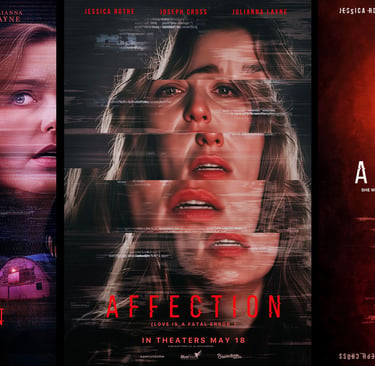
An independent film can benefit from having multiple pieces of key art designed for different stages of its campaign.
For example:
Teaser Poster
Something intriguing that establishes the tone without revealing too much.
Character Posters
Individual posters built around major characters.
Festival Poster
Artwork designed to represent the finished film as it enters the festival circuit.
Payoff Poster
The primary movie poster that communicates the film's premise and gives audiences the strongest reason to watch.
Different artwork can serve different purposes.
The goal isn't to create four versions of the same poster.
It's to create a campaign.

7. Turn Your Movie Poster Into a Social Media Campaign
Once you have your key art, don't simply post the finished poster once on Instagram and move on.
Break it apart.
A single movie poster can generate an entire collection of social media content.
For example:
Poster → character crop → quote card → detail crop → actor reveal → behind-the-scenes image → teaser → trailer announcement → festival selection → premiere announcement → streaming announcement
The visual language remains consistent, but each piece gives your audience another reason to interact with the film.
And don't forget the most important part:
Give people somewhere to go.
A social media post shouldn't necessarily end with the poster.
Link viewers to the trailer, film website, festival page, rental platform, streaming service or wherever the film can actually be watched.
The ultimate goal isn't simply to generate likes.
It's to move people from:
Seeing → Interested → Clicking → Watching
8. Let Your Audience Participate in the Artwork
Your audience can also become part of the campaign.
For example, post several poster concepts or character posters and ask:
Which one would make you want to watch the movie?
Let people vote.
This creates engagement while also giving your audience a reason to look more closely at the artwork.
You can even turn that participation into part of your crowdfunding strategy.
Imagine announcing:
The fans have chosen the official poster.
Then take the winning poster, have it signed by the cast and filmmaker, and offer it as a special reward to your financial backers.
Now your poster isn't simply advertising the movie.
It has become a piece of the movie's story and a tangible reward for the people who helped make it possible.


9. The Poster Is the Anchor — Not the Entire Campaign
This is the most important idea.
Your movie poster, film poster or key art should establish the visual identity of the film, but it shouldn't exist in isolation.
For an independent filmmaker, the visual campaign can begin with:
Crowdfunding artwork
↓
Pitch deck
↓
Production photography
↓
Behind-the-scenes content
↓
TikTok / Reels moments
↓
Makeup and practical-effects previews
↓
Teaser artwork
↓
Character posters
↓
Festival artwork
↓
Final movie poster
↓
Social media campaign
↓
Trailer / viewing link
↓
Rental or streaming release
The same visual identity follows the film through its entire journey.


You Made the Movie. Now Help People Find It.
Independent filmmakers are often so focused on getting the movie made that the second half of the process gets overlooked.
How do I get people to see it?
That's the marketing challenge.
Financing a film doesn't guarantee an audience. Getting into a film festival doesn't guarantee an audience. Putting a movie on a streaming or rental platform doesn't guarantee that people will discover it.
The film still needs to be presented, promoted and remembered.
That is why visual marketing should not be something you think about after the movie is finished.
Your movie poster is one of the most important pieces of that process—but it works best when it is part of a larger visual campaign.
You've already spent years making the movie.
Now give audiences a reason to find it.
Big Picture Co. creates movie posters, key art and visual marketing campaigns for independent filmmakers—from the first pitch deck and crowdfunding campaign through film festivals, social media and release. It all starts with an informal chat. Email or call and let's chat film!
email: steven@bigpictureco.net
Creative agency for independent film marketing and movie poster design.
Impactful Collaborative Design
email: steven@bigpictureco.net
© 2025. All rights reserved.